Building Management Systems: The Backbone of Smart Infrastructure

Controls & System Components

Automation & Integration

Integrates hardware and software to automate processes, improving energy efficiency and enabling seamless building operations.

Control & Monitoring

Centralized control systems and intuitive HMIs allow real-time monitoring and efficient building management from any location.

Infrastructure Management

Robust infrastructure for energy flow, ventilation, and safety—delivering intelligent control across all building systems.

A Building Management System (BMS) is an intelligent infrastructure that centrally monitors and controls various building operations such as HVAC, lighting, energy, and security systems. As illustrated in the diagram, BMS integrates hardware, software, sensors, and networked devices across all building zones—from energy generation in the basement to climate control and security in upper floors.

System For control, safety & Energy efficiency.

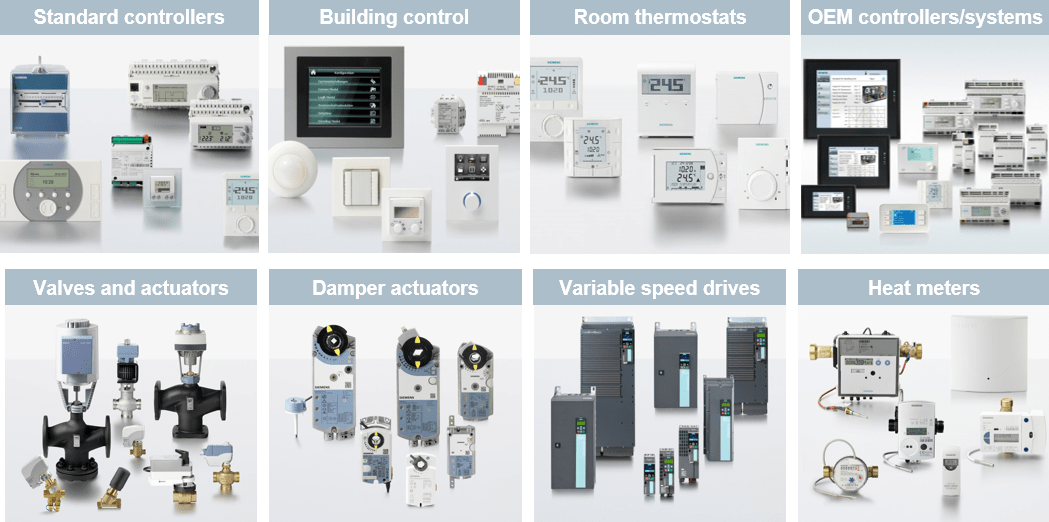
This is a centralized, integrated solution designed to monitor, control, and optimize building infrastructure and systems for comfort, safety, and energy efficiency. It connects and manages various components including:

Building Automation Systems for centralized control via user-friendly interfaces.
Standard & OEM Controllers that automate and coordinate multiple building functions.
Room Thermostats and Sensors for accurate temperature, humidity, and occupancy detection.
Building Control Interfaces for localized manual or automated adjustments.
Valves, Actuators & Damper Actuators to manage air and fluid flow across HVAC systems.
Variable Speed Drives (VSDs) that regulate motor speed for pumps and fans, enhancing energy efficiency.
Heat Meters to monitor thermal energy consumption for accurate energy billing and analysis.

Sensors

(BMS) Sensors

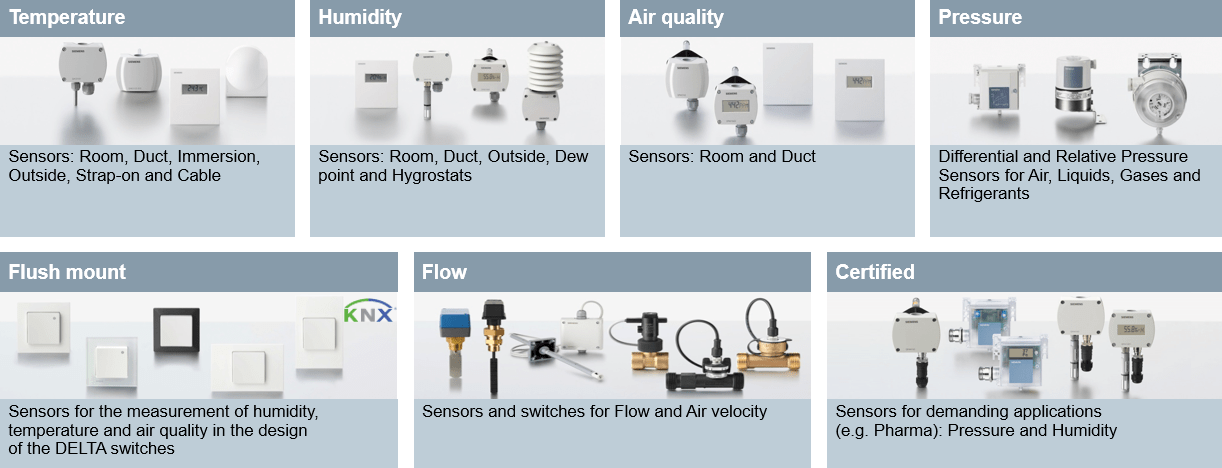
BMS Sensors are essential components in a Building Management System, designed to monitor and transmit real-time environmental and operational data. These sensors enable accurate automation and control of building systems by measuring key physical parameters. The main sensor categories include:

Temperature Sensors: Monitor room, duct, immersion, outside, strap-on, and cable temperatures for precise thermal control.

Humidity Sensors: Measure relative humidity, dew point, and include hygrostats for room, duct, and outdoor applications.

Air Quality Sensors: Detect indoor air quality (IAQ) in rooms and ducts to ensure occupant comfort and health.

Pressure Sensors: Include differential and relative pressure sensors for air, liquids, gases, and refrigerants—crucial for HVAC and fluid systems.

Flush Mount Sensors: Discreetly integrated into wall switches (e.g., DELTA design), they monitor temperature, humidity, and air quality.

Flow Sensors: Measure flow and air velocity in HVAC systems to ensure efficient ventilation and fluid control.

Certified Sensors: Built for specialized and regulated environments (e.g., pharmaceutical facilities), providing reliable pressure and humidity readings.

Centrum Business Square, A – Wing, 708 , Road no. 16, Near Lotus IT Park, Wagle Industrial Estate, Thane – 400604, Maharashtra